
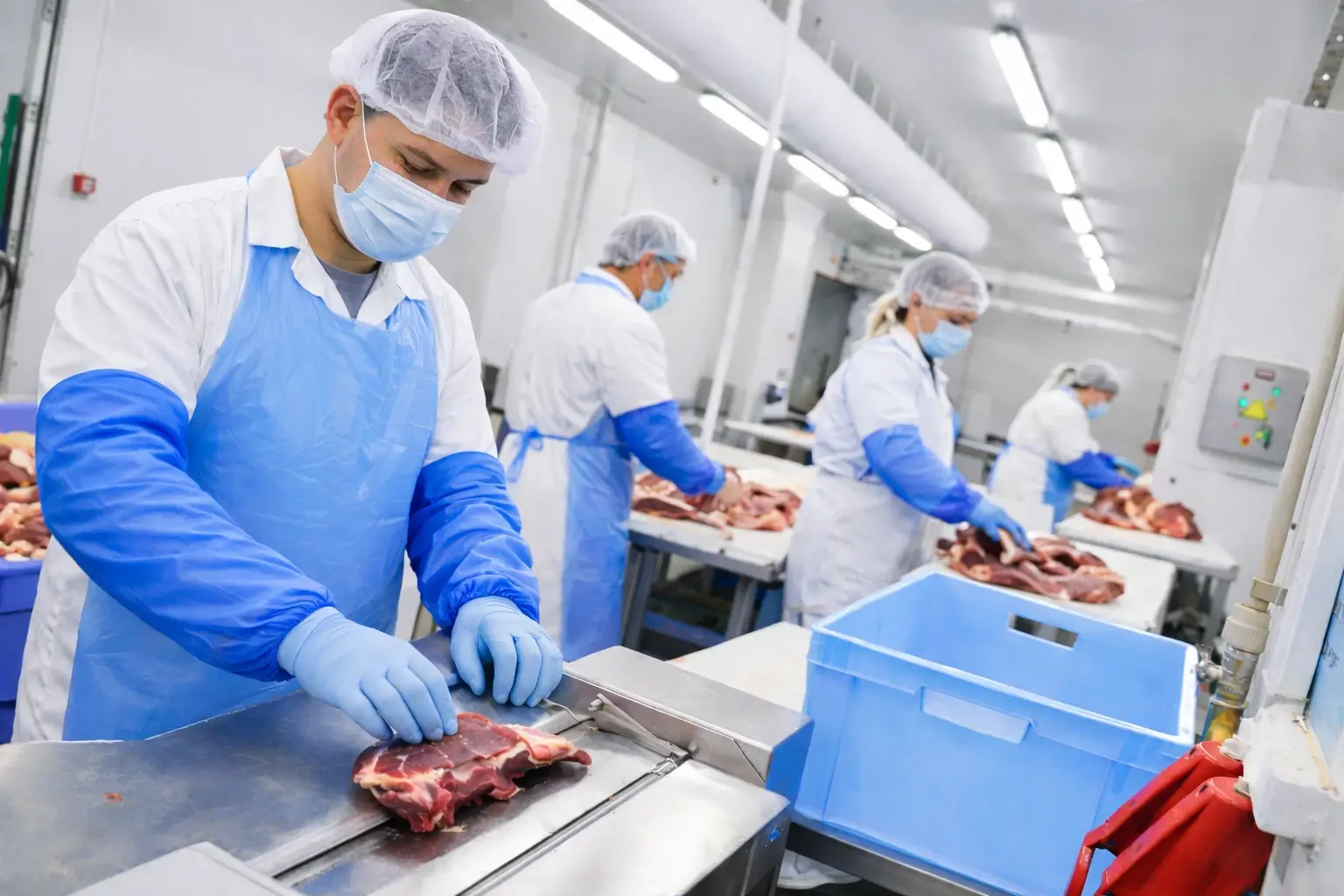
Choosing the right disposable clothing means identifying a solution that is appropriate for the risk, the task and the working environment. A hairnet used to limit contamination in a food processing facility, a gown intended for visitors and a coverall designed to protect against specific chemical risks serve very different purposes.
Disposable garments can help protect workers, support hygiene management or safeguard the production process. However, not every disposable garment is automatically personal protective equipment, and not all disposable PPE provides the same level of barrier protection. The selection process must begin with the intended use declared by the manufacturer and the documentation for the individual product.
In this guide, we examine the criteria for selecting coveralls, gowns, aprons, headwear, beard covers, sleeve covers and shoe covers for the food, chemical and manufacturing industries:
- Disposable clothing and disposable PPE: what is the difference?
- Which risks should be assessed before making a selection?
- Clothing for the food industry
- Clothing for the chemical industry
- Disposable clothing for the manufacturing industry
- Materials used in disposable clothing
- How to read markings and documentation
- Selection table by industry
- Practical checklist
- The Reflexx range
- Frequently asked questions

Disposable clothing and disposable PPE: what is the difference?
A disposable garment is designed for limited use rather than repeated washing and reuse cycles. It may be used to support hygiene and order or to protect clothing. It becomes disposable PPE when it is designed and placed on the market to protect the wearer against one or more health or safety risks.
The word “disposable” therefore describes how the product is used, not its level of protection. To determine whether a product is suitable, check its intended use, CE marking where applicable, PPE category, declared standards, performance and the limitations stated in the instructions.
When is a disposable garment considered PPE?
The function declared by the manufacturer is decisive. One gown may be intended primarily to protect clothing from dirt, while another may be certified to protect the wearer against a defined risk. Appearance, colour and perceived thickness cannot establish whether the two products provide the same barrier.
Category and type of protection: two different pieces of information
Within the European PPE framework, the category is linked to the severity of the risk against which the product is intended to protect. Some protective garments may also have a declared “type”, referring to the expected exposure scenario, such as airborne solid particles or limited liquid splashes. Category and type should not be confused and must be checked in the documentation for the selected model.
Which risks should be assessed before choosing disposable clothing?
Selection must begin with a risk assessment, not the garment’s product name. The first step is to identify the hazard, followed by the mode and duration of exposure, the part of the body involved and the required level of coverage. Only then is it possible to compare materials, construction and performance.
Substance, concentration and contact duration
For liquids or chemical agents, knowing the generic name of the substance is not enough. Concentration, temperature, type of exposure and contact time can affect the behaviour of the material. The company’s risk assessment and the safety data sheet must therefore be compared with the technical information for the PPE.
Required coverage and the most exposed areas
A localised accessory may be sufficient to protect the forearms, hair or footwear; other activities require a gown or disposable protective coverall. Particular attention should be paid to wrists, ankles, the hood, fastenings and seams, as well as the interfaces with gloves, footwear and respiratory protection.
Comfort, size and freedom of movement
Comfort is an operational requirement. A size that is too small increases tension on the material and the risk of tearing, while one that is too large may hinder movement or create snagging hazards. The right solution must provide protection, fit and freedom of movement compatible with the duration of the task.
Clothing for the food industry: hygiene and contamination control
In the food industry, disposable clothing helps separate workers from the product and the processing environment. Its purpose may be to limit the release of hair, prevent dirt and contaminants from entering production areas and help manage the movement of staff and visitors more effectively.
The required equipment must be defined according to the area, the process, HACCP procedures and company protocols. It is not correct to assume that every disposable garment is suitable for every food environment: the characteristics, materials and any limitations must be checked for each individual product.
Food-industry hairnets, beard covers and disposable shoe covers
Disposable hairnets for the food industry must fully contain the hair; where facial hair is present, a disposable beard cover may be required. Disposable shoe covers help manage access and limit the transfer of dirt between areas. Where required by the flooring and the task, non-slip shoe covers should be considered, while always checking their specified conditions of use.
Disposable aprons, sleeve covers and gowns
A disposable apron protects the front of the body; a waterproof apron may be suitable where water or splashes compatible with the material are present. Disposable sleeve covers extend coverage to the forearms, while a disposable gown provides broader protection for clothing.
Visitor kits for managing external access
A disposable visitor kit makes it possible to provide technicians, maintenance personnel, auditors and guests with a consistent set of gowns and accessories. However, the contents of the kit must reflect the risks in the area: a standard package does not replace access procedures or an assessment of the task performed by the visitor.
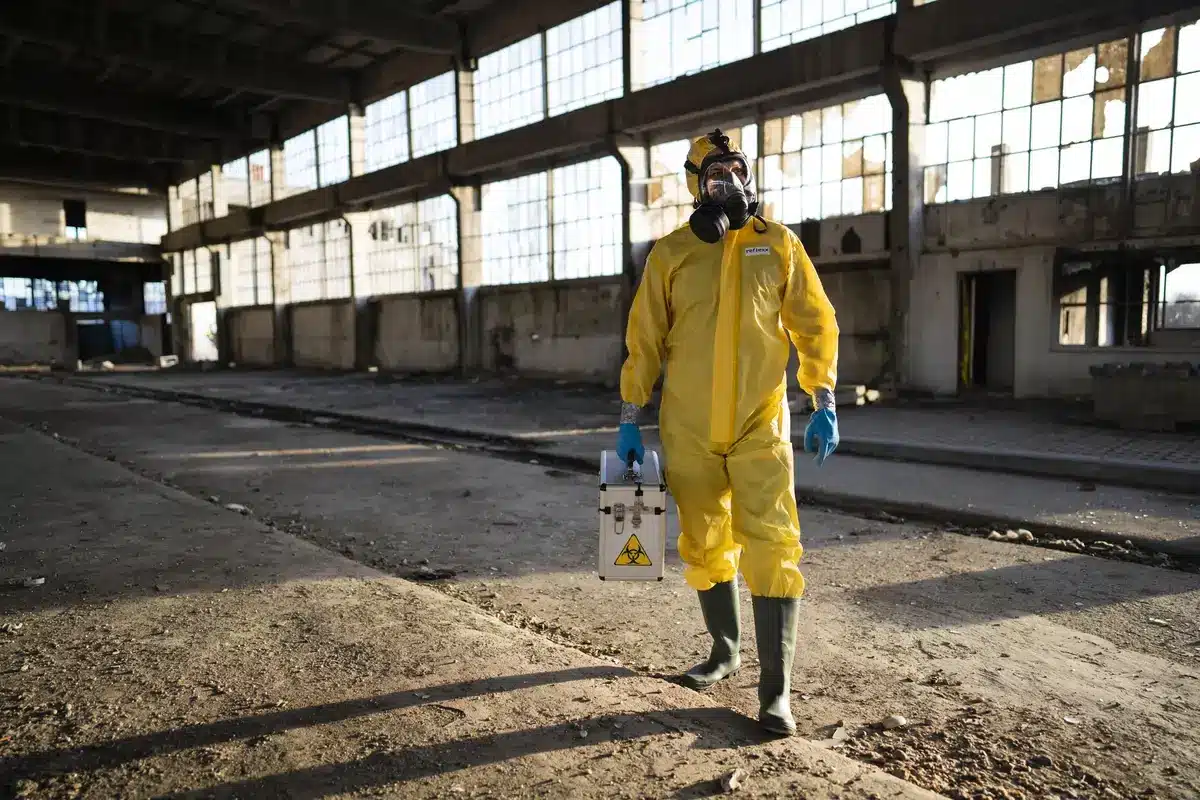
Clothing for the chemical industry: compatibility comes before material
Selecting disposable clothing for the chemical industry requires a detailed assessment: there is no coverall that is universally resistant to every substance. A material may provide a good barrier in one scenario yet be unsuitable for another substance, a higher concentration or longer contact.
Before making a selection, determine whether the risk comes from particles, dust, splashes or liquids, and establish which part of the body may be exposed. The substance’s safety data sheet and the PPE documentation must be read together.
How to choose a coverall for chemical protection
When assessing a chemical-protection coverall, check the material, seams, fastenings, hood and declared performance. The available data must also be checked against the specific substance, as must compatibility with gloves, footwear and respiratory protection. The description “protective coverall” alone does not demonstrate suitability.
When a disposable coverall is not enough
High levels of exposure, particularly hazardous substances, pressurised jets or prolonged contact times may require more complex or reusable protection systems. In these cases, the safety manager and a technical supplier capable of correctly interpreting the performance data should be involved in the selection process.
Disposable clothing for the manufacturing industry
In manufacturing, requirements vary across assembly, maintenance, dusty operations, painting and access to controlled areas. The selection of disposable clothing for the manufacturing industry must therefore be carefully considered. Protection may be required against dirt, particles, splashes or process contamination, while abrasive surfaces, repetitive movements and potential snagging points must also be taken into account.
Protective coverall or disposable gown?
A protective coverall should be considered when more complete body coverage is required. A gown may be more practical for visits, inspections or tasks involving more limited exposure. The decision must be based on the risk, not simply on how quickly the garment can be put on.
Accessories for localised protection
Sleeve covers, aprons and shoe covers provide protection for specific areas. They can complement another garment, but must not leave exposed areas uncovered or create incompatibilities. For shoe covers, it is also essential to assess the flooring, grip and slip risk.
Disposable clothing materials: what difference do they make in use?
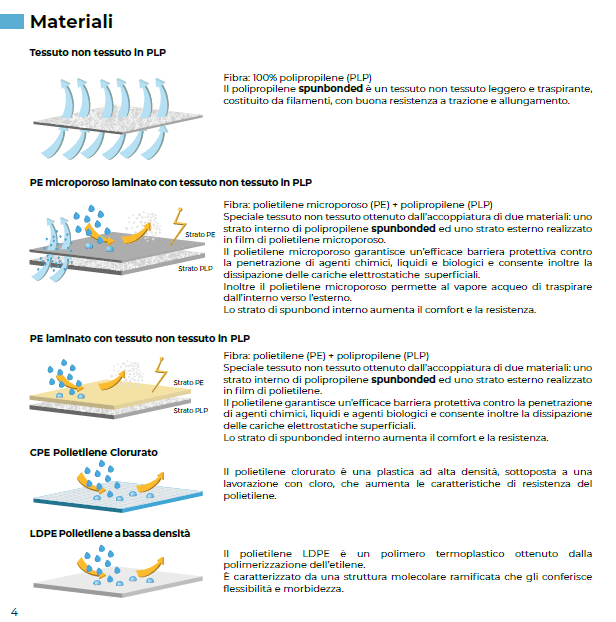
Lightness, breathability, mechanical strength and resistance to liquids do not necessarily go hand in hand. Material is therefore an important but insufficient criterion: performance must be verified on the finished product, taking its construction and intended use into account.
Polypropylene
Polypropylene is widely used in disposable clothing due to its light weight and practicality. A disposable polypropylene coverall may be suitable for tasks requiring coverage and protection against dirt, but it should not automatically be considered waterproof or suitable for protection against chemicals.
Polyethylene and CPE
Polyethylene and CPE are used in various accessories in this field, including aprons and disposable CPE shoe covers. They can provide a useful barrier against moisture, but strength, grip and comfort depend on the specific construction.
Multilayer materials and technical barriers
Multilayer structures can combine different characteristics, such as strength and barrier protection. However, the number of layers alone cannot predict performance: testing, certifications and the limitations declared by the manufacturer are decisive.
How to read the markings, technical data sheet and instructions for disposable PPE
Before purchasing, it is necessary to check the product documentation. For PPE, the main information includes the intended use, CE marking, category, applied standards, performance levels, sizes, storage conditions and limitations. The declaration of conformity also makes it possible to verify the reference to Regulation (EU) 2016/425.
Information that should not be overlooked for disposable PPE
- product code, batch and traceability;
- PPE category and any notified body, where required;
- pictograms, standards and declared performance;
- instructions for donning, use, doffing and storage;
- compatibility with other PPE used for the same task.
The most common mistakes when selecting disposable PPE
- Confusing “disposable” with “universal protection”.
- Selecting a product based only on its thickness or colour.
- Ignoring size, mobility and interface points.
- Reusing a product intended for single use.
- Overlooking the doffing procedure and the disposal of contaminated waste.
Disposable clothing selection table by industry
The following table provides initial guidance. The final selection must be confirmed by the risk assessment and the product documentation.
Protection by industry and task
| Industry or task | Main risk | Area to protect | Solutions to consider | Required checks |
|---|---|---|---|---|
| Food industry | Hygiene and contamination | Hair, beard, clothing, forearms and footwear | Hairnets, beard covers, gowns, aprons, sleeve covers and shoe covers | Area, HACCP procedure, material and product characteristics |
| Chemical industry | Particles, splashes or chemical liquids | Whole body or exposed areas | Coverall and accessories with compatible performance | Substance, concentration, temperature, exposure and technical data |
| Manufacturing industry | Dirt, particles, splashes and physical stresses | Varies according to the task | Coverall, gown, apron, sleeve covers and shoe covers | Mechanical risk, mobility, environment and compatibility |
| Visitors and external technicians | Incoming contamination and risks in the area | Clothing, hair, beard and footwear | Visitor kit configured for the area | Route, duration of access and activity performed |
Checklist: how to choose the right disposable PPE
The following sequence can help when selecting a professional disposable garment:
- Identify the hazard and the consequences of exposure.
- Define the mode and duration of contact, distinguishing between dust, particles, splashes and liquids.
- Establish the part of the body to be protected and the required level of coverage.
- Compare materials and performance using the documentation for the finished product.
- Check markings and conformity against the identified risk.
- Check size and compatibility with gloves, footwear and other PPE.
- Define replacement and doffing procedures, as well as how waste will be managed after use.
A structured selection process reduces the risk of purchasing a product that is oversized or, more importantly, insufficient for the actual exposure.
Reflexx disposable clothing for professional applications
Reflexx offers a range of disposable clothing for professional use in the food, chemical and manufacturing industries. The range includes protective coveralls, gowns, aprons, visitor kits, headwear, beard covers, sleeve covers and shoe covers. The different categories make it possible to identify either full or localised coverage according to the operating context.
For distributors and businesses with specific requirements, technical support makes it possible to match the product more precisely to the risk and conditions of use, simplifying a selection process that should never be based solely on price or habit.
Do you need support in choosing the most suitable solution for your application? Contact the Reflexx team for more information and to identify the disposable clothing best suited to your business needs.
Frequently asked questions about disposable clothing
Is all disposable clothing considered PPE?
No. A disposable garment is considered PPE only when it is designed and declared to protect the wearer against one or more risks. The product markings and documentation make it possible to verify its function, category and performance.
How should disposable clothing for the food industry be selected?
Start with the production area, the risk of contamination, the parts of the body to be covered and the company’s HACCP procedures. Hairnets, beard covers, gowns, aprons, sleeve covers and shoe covers must be selected according to the specific process.
Which disposable coverall should be used with chemicals?
No single coverall is suitable for every substance. The selection must take the chemical agent, concentration, temperature, type and duration of contact into account, comparing the safety data sheet with the performance and limitations declared for the PPE.
Can disposable garments be reused?
A product intended for single use must not be washed or reused unless the manufacturer specifies otherwise. Reuse may compromise its integrity, hygiene and protective performance.
How should the size of a protective coverall be selected?
Consult the manufacturer’s size chart and check that the coverall allows the required movements without creating tension, openings or excessively loose areas. The fit test should also include the other PPE used for the task.